Problem / Research Question
Can psychological safety in engineering student teams be taught — and does it change the ideas teams generate and select?
Why It Matters
Innovation depends on people voicing risky, half-formed ideas. When team members fear judgment, they self-censor and the most creative options never reach the table. Teaching teams to create safety is a direct investment in better designs — and it shapes whether students from underrepresented communities stay in engineering.
What britelab Is Doing
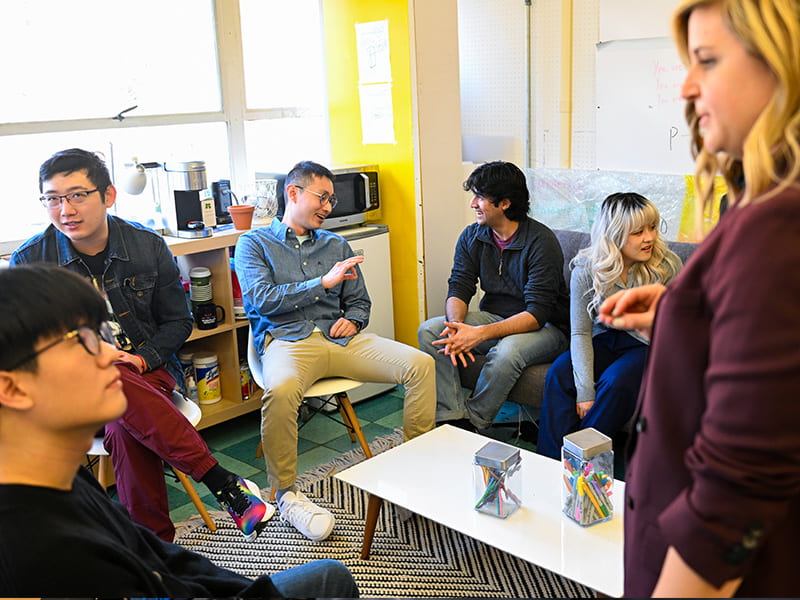
This five-year NSF-funded project turns britelab's longitudinal research on psychological safety into practical team training. Across studies of more than 500 first-year engineering students in 135 design teams, we linked psychological safety to idea sharing, the selection of creative concepts, and team performance over time. The project now scales those interventions — teaching teams to build safety early — to multiple campuses and universities, with measurable effects on how students collaborate.
- Train student teams to build psychological safety early in the design process
- Scale the inclusive teaming model to multiple campuses and universities
- Improve belonging and retention for students from underrepresented communities
- Develop data-driven approaches to team formation
- Create replicable frameworks other institutions can adopt
Methods & Technology
Research Team
Funding Agency
NSF ($1.4M grant)Outcomes / Impact
Psychological safety can be trained, not just hoped for. Teams that feel safe share more ideas and are more likely to select creative concepts — so teaching teams how to create safety is a direct investment in better designs and in keeping diverse talent in engineering.
Related News
- Q&A: Can you encourage inclusivity by changing how students work together?
Penn State News · Oct 14, 2024
Collaborate With Us
Sponsors, faculty collaborators, clinicians, and journalists interested in Inclusive Team Training are welcome to reach out.
Contact Dr. Miller