How AI Is Changing Medical Simulation Training
Sensor-rich simulators and automated feedback are helping physicians master high-risk procedures before they reach the patient.
britelab · Jul 20, 2026 · 5 min read
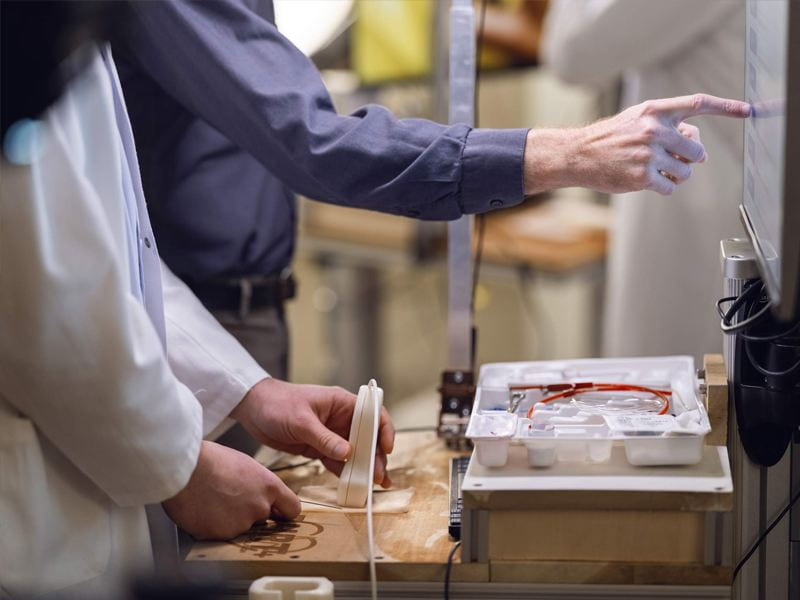
Procedures like central venous catheterization carry real risk, and traditional training depends on scarce expert time. britelab and clinical partners have built simulators that let residents practice repeatedly and receive objective feedback.
From practice to feedback
Our Dynamic Haptic Robotic Trainer and related systems combine haptics, sensing, and computer vision to measure needle technique and give immediate, personalized feedback — without an instructor at the bedside.
Scaled impact
These systems have been used to train more than 1,000 physicians across Penn State Health, Cedars-Sinai, and West Virginia University, and our studies connect simulator performance to skill transfer.
What's next
We are extending automated feedback to endoscopy and laparoscopic training, using gaze and motion data to predict proficiency and personalize practice.
Related project
Central Line Simulation
See related work in our publications or meet the research team.